
For the record, I completed my first and, to this point, only marathon over a year ago. Not to downplay this accomplishment, but it’s worth noting that only about 2% of Americans have completed one in their lifetime. Checking this off my list at 25 years was quite accomplishment. My finishing time of about 3:40 was just about average for my age group, which is respectable in its own right. Now, let’s rewind to the moment I crossed the finish line.
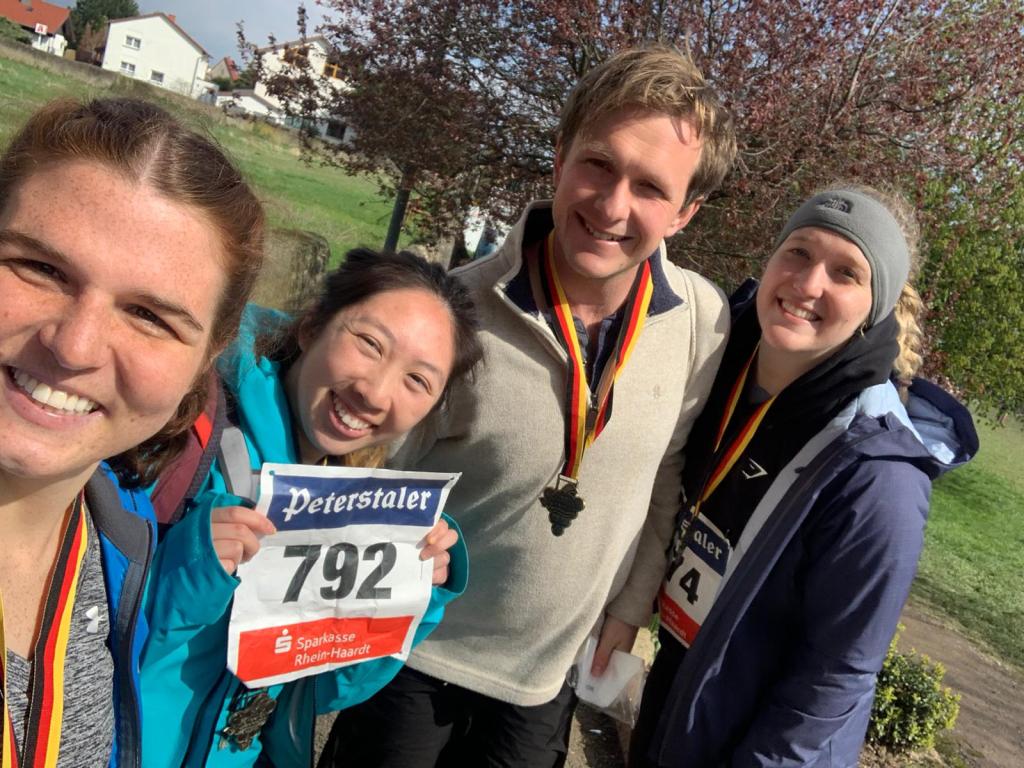
Most people would expect me to heave my arms in the air and shout for joy as I crossed this finish line. However, as my friends at the finish line observed, I was in no mood for celebrations. SHOCK! I had smirk that was indistinguishable from a smile and an exhausted frown on my face, and my clothes were soaked in a mixture of sweat and rainwater. I finished, received my medal, hugged a couple of friends half-heartedly and I limped to the refreshment tents. I immediately grabbed a sparkling lemonade, non-alcoholic beer and some apple slices to quench my pounding thirst. I remember sitting outside 40 degrees Fahrenheit weather with hail falling around me. My body did not want to move, and my mind was full of too much of what one sometimes calls “Runners-High”. Have I run anything more than 10 miles since then? No. Would I run another Marathon in my lifetime again? That is maybe. Although I should have been elated, I felt more shattered than anything else. It was a learning experience and I would like to share these ideas with my audience.
The most important thing is that training for anything of magnitude (and even for smaller goals) takes time. I didn’t give enough time to train and respect the total 26.2 miles of a marathon. Retrospectively, I should have taken the training process slower, especially considering I had contracted Covid eight weeks before the race date. Although I was already in decent shape, thanks to my high school swimming background and cardio buff nature, an 8-week training plan was quite aggressive. If I had been consistently running 10 miles per week, a 12-week training plan would have been reasonable. I was at the time only running 3-5 miles per week, which was not a strong enough basis. Honestly, there were a few weeks in the training plan that I skipped runs because of soreness and fatigue. Running takes a toll on the body at various stages. In the beginning, the knees and joints need to become comfortable with the repetitive motion of hitting the asphalt. Later on, the body also needs time to recover from increased mileage in terms of energy and muscle soreness. I ran the marathon with a slightly sore Achilles, which required about 3-4 months of light training to fully heal. Pushing through the training while ignoring warning signs was probably in hindsight unwise; I consider myself lucky.
The next thing I learned is that events of great length take careful planning. I was able to train for my marathon in the semester break of my school, which allowed a few extra hours a day for training and recovery. Most marathon bloggers mention that their families must be patient as they prepare for marathons, ultramarathons, and triathlons because they are time demanding. When you plan an 8-mile run in the morning, you must factor in getting ready, possibly fueling if you don’t like to run on an empty stomach, the hour or so it takes to finish the eight miles, and then 20-30 minutes for a cooldown, stretching and showering, and refueling. This process takes upwards of two hours if you are relatively efficient. In a typical week, there could be two to three 8-mile runs during the peak of your training.
The last piece of advice that I will share is that watching YouTube videos, seeking advice from run experienced friends, and potentially finding a training partner can all be sources of motivation and psychological preparation for the crazy task of running for 3-4 hours at once. Like any endeavor, immersing yourself in the world of marathon running allows your mind to devote more energy to the task at hand. I would often watch a few videos on how people achieved sub-four-hour marathons, with simple tips like avoiding overtraining, bringing fuel on the run to avoid crashing, practicing race day strategies ahead of the race, as well as refining running technique to avoid injuries. These videos fed my obsessive mind, and I believe this level of obsession can benefit the entire process. This allows the goal to be front and center and encourages you to double check if you are getting the most out of the training.
As you can see, I learned a great deal about the marathon process, my body, and the importance of preparation. Now to answer the question, why run a marathon? I think there are a lot of reasons to consider doing it, but also reasons to think twice before engaging in the cult of marathon running. If you have a running group and want to train with a group for the goal, I think this can be a great idea. I, on the other hand, did my training alone and relied on the Strava camaraderie to push me through the insanity. If you have this as a bucket list item and would have FOMO if you didn’t do it, I recommend doing the race once. Reasons to pursue a marathon include using it to get in shape, as running 26.2 miles is quite extreme and can lead to injury and an unhealthy amount of cardio training. The time commitment issue is also a consideration when prioritizing activities in life. The last consideration is cost. Although minimal, registration fees, racing energy gels, shoes, and running gear can be as much as $300-$500, depending on the shoes and the race location; this excludes of course hotel and travel costs.
I would like to close with a sweet story on my marathon-day journey. The course that I ran “Bockenheim an der Weinstraße”, near Mannhein featured about 1500 feet of elevation changes and that means…hills. Living in a city named Karlsruhe, Germany that has practically no hills, this elevation change posed a new challenge. The second half of the marathon did indeed include more inclines than declines and I was hitting “the wall” (that is a moment when glucose runs out and the body wants to give up) around mile 23. I met a man, that I’d estimate was 45, clearly with marathon experience. He saw that I was walking up a hill and put his hand on my shoulder and gave me a slight push to start running again. He shouted at me the typical “don’t give up” encouragement when I needed it the most. We ran the last 3 miles together at quite a decent pace in comparison to the last 20 minutes of the race. I thanked him afterwards and realized that although it was difficult and my body was not functioning, some support along the way and the atmosphere of the marathon do help lift someone out of this rut. The marching band and wine shower in the second half of the marathon also helped with some of the motivation. But like always, more of this story will come later. Until next time!
 Thoughts with David