The Gut-feeling of Greatness

One thing that blows my mind is that a visual piece of art such as a painting can be so ripe-full of emotion. Logically we look at a painting and understand that a variety of paint strokes and points on the canvas create the work. We can see a certain shadow, tree branch, or a concerned look on a character’s face that we know is intentional and contributes to the quality of the art. However, sometimes we take a step back and are just hit by a chilling wave of the emotion that a painting evokes for some mysterious reason.

I can count only on one hand the amount of bad paintings I’ve seen…No this is of course not true. The amount of poor art that I’ve seen as decorations or in stores waiting to be sold is an overwhelming majority. This is of course this is quite subjective for some people (…Insert list of 10 warrants of subjectivity). For me, poor art is simply art that does not create an emotional reaction. A fine point of my definition might even include a clause about necessitating truthfulness, but that argument is for a late night or future bllloook (haha blog and book combined).  ANYWAYS, great art is far and few between and when it strikes you, it really has an effect.

Recently I visited the Claude Monet exhibit at the Albertina in Vienna- here I experienced great art. The eight room exhibit marvelously chronologically “paints” the progression of his artistic life.  Through the exhibit, one can see Monet’s style develop from more simpler forms to his more Impressionistic paintings, playing with color and more!

As I was walking through the museum with my language buddy (a University of Vienna Student), I mentioned to her that I can feel the emotions just radiating from the paintings. She turned, nodded, smiled and enough was said. There was something magical about these paintings, with each creating such a different feeling. I am of course no art expert, but I just relied on my gut and emotions to enjoy and soak in these masterpieces. However, there were paintings that did not create an emotional experience and according to my definition, this would be poor art. But if someone used my criterium, they would find a different set of great works- but this never-ending cycle of differing feelings is life I guess!

Overall, there is nothing like walking through this exhibit on a beautiful afternoon. Experiencing the art first hand created feelings of love, childhood, familiarity, expansiveness and so much more. I witnessed great art.

As a musician myself, sometimes we forget the simple objective is to move people as I was moved by Monet’s Masterpieces. Yes, this requires craft, time and patience, but the emotional connection to the audience is what truly matters. Recently in my practice, it is easy to get bogged down by focusing on the minutia, or physical sensations instead of really feeling the larger picture and the way the emotions are attached to the listening and playing. Once someone taps into these sensations, then people might pay fifty dollars to go hear THAT type of concert…
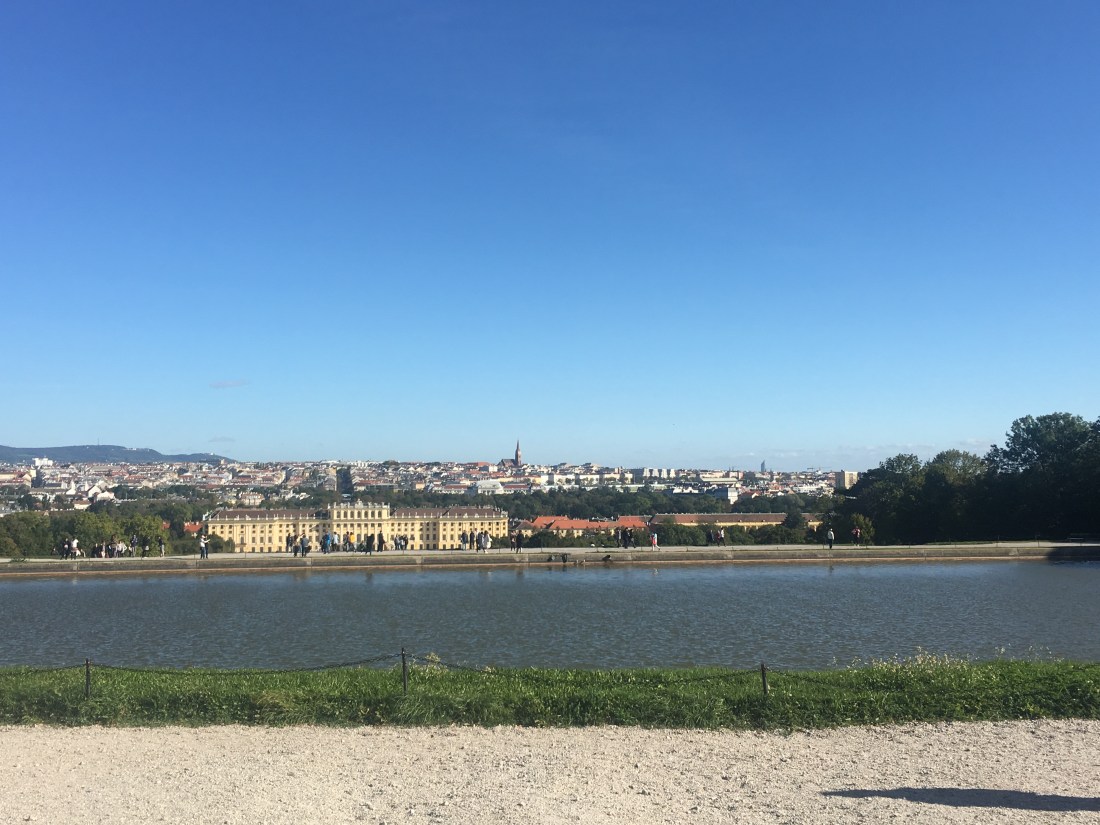
 

THE AIR!!

The old cliché saying “Music is in the Viennese air” is neither old nor cliché because it is true. There is something profoundly magical about the city of Vienna. Of course, you walk around and see the phony salesmen in Classical period costumes. Of course, you see monetization of the heavenly music of Mozart, Schubert and Strauss.  However, in the end of the day this “air” that we are breathing is a byproduct of the commercialization of these wonderful parts of culture and of the actual amazing music created throughout the city.

People line up for hours just to find three or four euro standing room tickets to the Wiener Staatsoper, which is probably the best musical experience in Vienna, especially for the price. Also, the famous “Wiener Philharmoniker” has a thirteen-year waitlist for subscriptions to its concerts. This paints a picture of the love for music in a city a quarter the population of New York City; Proportionally, this will never be found in America.

There is something special here culturally and living in the city helps me to create a deeper love of music.  Nearing the end of the last academic year I had lost some musical spark and seemed stuck in a rut. I almost had a disgust for any music earlier than Wagner in the late 19thcentury, scoffing at the boring harmony, melodies and more (shameful I know). The summer away from school allowed me some chance to reconnect, but there was still some true and sincere spark missing from my own musical creation. Arriving here, there is no other analogy to describe the sensation other than you guessed it, a light switch. Night and day, I felt embraced by this music. The harmony of Mozart and Haydn no longer seemed boring, but rather perfect and beautiful in its own ways. Living and breathing as close as I can to the source of the music has helped tremendously.

You might tell me to hold the cheese or throw whatever profane phrase you know at me, but this is just the truth. There is something about the tradition and intellect in the city that surpasses what I’ve felt before. Some logical conclusions might suggest that the musicians play with more passion and with less precision creating a livelier and humanly experience. Or some might suggest that there are more great artists coming through here than in any other city. Some might say that Vienna has all of the historical resources to realize the music in its initially intended form. All that being said, I can only explain my experience through this magical air. The air has saved my soul and I am so grateful for being given the opportunity to study in Vienna for a semester abroad.

IMG_4443
Morning Run- Grateful for this City!

Gasping on the Hamster Wheel

There is a typical pattern of a college semester- the first two weeks feel amazing as there are no real tests or projects due in the imminent future and everyone is fresh from the break. Piano lessons and ensembles during the first week are the most important part (which continue to be throughout the semester). Around week four or week five, midterms commence and project deadlines approach, creating a hamster wheel effect. We as students enter the hamster wheel on Monday morning, and by Friday afternoon we feel like we’ve been spinning in circles for a minute, hours, oh wait I mean a week. Soon enough, finals are over and then we run away never to see school ever again…until next semester.

I have found ways to exit the hamster wheel throughout the semester with limited success. Each departure from this wheel feels like a breath of fresh air, connecting my soul to a part of the real world instead of stuck in a schedule. Whether this break might be seeing a new concert on campus, or walking a different way home, spontaneously playing chamber music with friends, deciding to go swim in the middle of the afternoon, or just thinking in the brisk air about life, there are many ways for me to connect to the world.  Feeling the earth underneath my feet and breathing the fresh air outside allows me to slow down for a millisecond to enjoy the world.

Here in Vienna, there are so many ways to get this “breath of fresh air”. The irregular schedule the IES Abroad program provides allows for the feeling of staleness never to creep in. We just finished the first week of classes after the German intensive, which is later than most semester programs. During each day I try to find something new each day. Whether I spend an hour wandering the first district of Vienna, finding a coffee shop, or visiting another museumor concert, I try to find something that will let me breath and remember where I am. The number of concerts, games, museums, vacation spots, hiking spots and more will never run out for the next three months.

Oh, and how wonderful trying the new can be for all aspects of life. It really creates that new perspective.  So, if I ever again catch myself on the hamster wheel and not able to feel connected to where I am, I will take a breath of fresh air, at least on the weekends. The question is will you?

Three Weeks AGO!!!
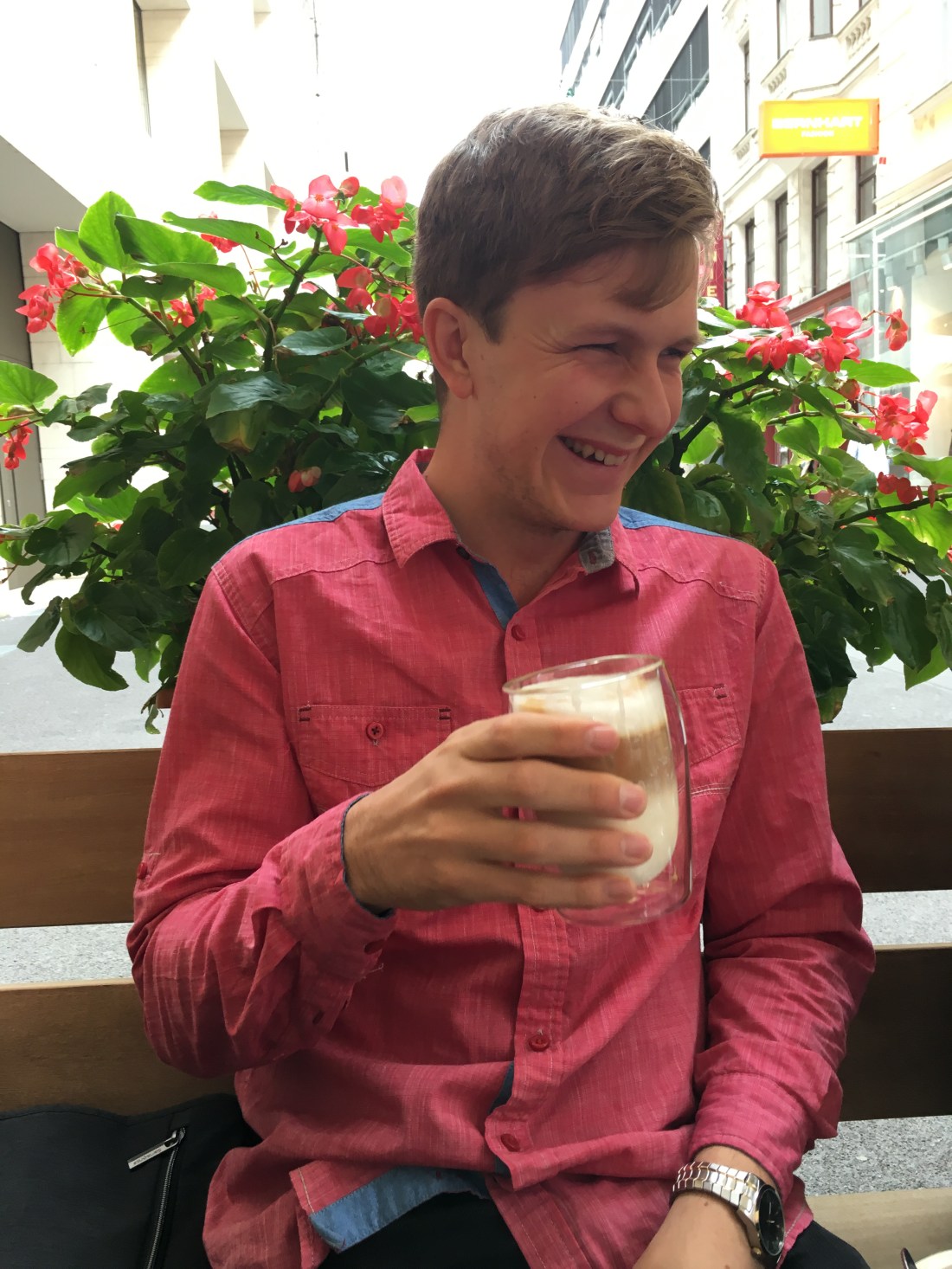
Coffee at the Coffee House a few weeks ago!

Slow Weeks

Cloudy haze falls, rain dribbles and body slumps,

Eyelids droop, breathing heavies; rest is needed


Running all day, back and forth, up and down,

Sprinting from emotions, conversing in fumes,

Run, Run, Run, Run down the river of life.


Tides set in, the slack is used,

The cloudy haze is here, and rain comes.

The end looks near, yet it’s not so.


It’s not so because I say it’s not so-

It’s not so because I know it’s not so-

It’s not so because it will not be.


Slowly, slowly, slowly- ripples crumble

Sun beams shine, dew evaporates

Breathing continues, and resting heals.


City life jives, and street light floods the sky,

Food, glorious food, energy filled conversing;

Then finally music seeps through into heaven.


Then all is well, all is well.

Life goes on not run, run, run,

but frolicking, jogging and being.


–Summary of my sick week in Wien

This slideshow requires JavaScript.

Musician’s Experience in College

I’ve repeated these lines thousands of times: Where are you from? (…) What school do you go to? (…) What’s your major? (…) Whenever entering a new program with eager college age students these types of questions tend to pop up. However, as soon as I am on the receiving end and answer the question “What’s your major?” with “I’m a Piano Performance Major”, I usually get one of three responses: 1. Oh, that’s so cool, must be so fun! 2. Wow, that must be such a lot of work but so rewarding. 3. They stare at me and run away. Okay, maybe just a variation of answer one and two. Unfortunately, there is an understanding that music is cool (duh, which is true), fun (true!), and most importantly doesn’t require too much time(cough cough).  However, I think that especially University’s underestimation of the time and dedication required to create true artistry is something that needs to be addressed.


As I’ve grown as a musician, I’ve realized that it takes an intense dedication of time to accomplish the goals on the way to a professional career. Setting aside effort, everything in the industry simply requires a lot of time because there are such great complexities. For example, when learning a new piece of music, the biggest time commitment is the process of truly integrating the music with the soul. First as a musician, I must look at the score and see what the composer wrote, and then attempt to feel what the composer was feeling. This communication between the performer and the composer can take months and sometimes years to fully connect. Yah, this sounds a little crazy…I know. Maybe it is a form of craziness, but this is the best way for me to explain a big component of this true artistry.


In college, finding this “intense dedication of time” is very difficult with the enticement of joining clubs, Greek Life, friend circles, special events and speakers, challenging course work, and enjoying hobbies. During my first years of college, many great friends and I tried everything we could do to find some ways to enjoy and create a balance in life. The problem occurs when my friends or I only have two or three hours available each day to focus on creating the music or art- that’s simply not enough time to create true gold.


Now here in Vienna, we just finished the German Intensive which is supposed to be the most difficult part of the semester before all classes commence on September 17th. However, for the musicians, this was amazingly difficult. From attempting to keep up with three hours of German, three hours of homework, practicing four or more hours a day, additional meetings, and seeing the city and concerts, all the hours in the day were filled with purpose as well as a little less sleep. This sounds amazing a great, but when I found only about two or three hours to practice most the days, something inside me felt uneasy because I knew I needed more time.


In the end of the day though, the college schooling system is not ideal for musicians. They are in ways that I can only back from personal experience, not allowing creativity to push forward. Probably ninety percent of what musicians will learn comes from their time and dedication to craft and creation. There is a fine lining to this sentence though, and that’s that education is very important for a musician learning about the world as well as different issues. The problem is when schools regulate what this education looks like and what we should learn. As a musician we choose to go through the system to get the degree and learn something from the program. However, in the end of the day our number one priority must be on creation and then surviving the rest. This mindset must take charge in the name artistry.